After talking about Postcrossing on Instagram, I realized how many questions people actually have. Some are practical, some are a bit worried, and some are just trying to understand how this even works.
People don’t just get curious. They get very specific questions almost immediately. If you’re new to Postcrossing, or thinking about trying it, these are the questions people usually ask first.
“Wait… you send your real address?”
“Do you actually get something back?”
“Isn’t this expensive?”
And my personal favorite:
“Is this… safe?”
Which, to be fair, is a completely normal reaction. Postcrossing is one of those things that sounds slightly weird until someone explains it properly. And most of the time, no one really does. You just hear bits and pieces, try to imagine how it works, and fill in the gaps yourself. So you end up with a mix of curiosity, hesitation, and a tiny bit of “this sounds fun, but also… am I missing something?”
I’ve been in this hobby for more than seventeen years, and I’ve heard all versions of these questions. From people who are just discovering it, from those who tried it years ago, and from those who almost joined but never quite did. So instead of giving you a clean, official explanation, I thought I’d answer the questions the way they actually come up. The slightly messy, honest version that makes it easier to understand what Postcrossing really feels like, not just how it works.
In this post, I answer:
– Is Postcrossing safe?
– Do you send your real address?
– Do you get a card back?
– How much does it cost?
– What should you write?
– And more…
Let’s start.
Do you really send your address to strangers in Postcrossing?
Yes. You do send your real address to a stranger.
And that’s usually the moment where people pause for a second. But here’s what actually happens. You’re not posting your address publicly anywhere. It’s not visible on your profile, and no one can just browse and find it. You only share it with the person who sends you a postcard.
So it’s not “my address is on the internet.” It’s more like: “I chose to send a postcard, and the system gave me one person to send it to.”
Over the years, millions of postcards have been exchanged this way, and serious issues are extremely rare. Most people are there for the same reason you are: to send and receive something small and real, not to do anything weird with your address.
And if it still feels uncomfortable at the beginning, you can always start slow. Send just one postcard, see how it feels, and decide from there. You don’t have to go all in on day one. What usually happens instead is that your address stops feeling like something “risky” and starts feeling like a place where nice, unexpected things arrive.
Is Postcrossing safe, or am I overthinking this?
Short answer: it’s understandable to worry, but yes, Postcrossing is generally safe.
Most of the concern comes from the idea of sharing your address, which feels like a big step if you’ve never done anything like this before. In reality, the system is quite controlled. Your address isn’t public, and it’s only shared with one person at a time when you request to send a postcard. You’re not putting your details out there for everyone to see.
There are also millions of users, and the whole project has been running for years. If there were serious, widespread problems, it simply wouldn’t have lasted this long or grown the way it has.
That said, a bit of caution is always healthy. You can keep your profile simple, avoid sharing personal details you’re not comfortable with, and start at your own pace.
Most people discover pretty quickly that the reality is much calmer than the fear. Instead of something risky, it ends up feeling like a quiet, positive exchange with strangers who are there for the same reason you are.
Do you get a postcard back from the same person you sent to?
No, and that’s actually one of the things people find most surprising at first.
You don’t exchange postcards with the same person. You send your card to one address, and then, at some point, you receive a postcard from someone completely different, from somewhere else in the world.
So it’s not a one-to-one exchange. It’s more like a chain. Every time you send a postcard, you move forward in the system and eventually receive one back from another person.
At the beginning it can feel a bit strange. You might think, “But what if I send something nice and get something random in return?” And yes, that can happen. But that randomness is also a big part of why people enjoy it.
If you’re looking for something more personal or ongoing, that’s where penpals come in. But Postcrossing is more about small, unexpected moments from different people, rather than building one long conversation.
And once you get used to it, it starts to feel less like “I didn’t get something back from the same person” and more like “something is always on its way.”
What if I send a postcard and never receive anything?
This is one of the fears people have at the beginning, and honestly, I understand it.
You send a postcard, you wait, and then your mailbox stays very quiet. Rude behaviour from the universe.
But Postcrossing doesn’t work like an instant trade. You don’t send one postcard and immediately get one back from the same person. Your address goes into the system, and someone else will receive it when it’s your turn. Sometimes it happens quickly. Sometimes it takes longer. Mail has its own mysterious little personality, and not all countries move at the same speed.
There can also be expired postcards. That means a card didn’t get registered within the expected time. It’s annoying, but it happens to everyone sooner or later. The best approach is to start slowly. Send a few postcards, let the system move, and don’t judge the whole hobby by the first quiet week. Postcrossing is not fast. That’s kind of the point.

How expensive is Postcrossing really if you do it regularly?
It depends completely on how often you send and where you live. That’s the part people sometimes forget. Postcrossing is not a subscription, and no one is standing behind you saying, “Excuse me, where are your 20 postcards this month?”
You choose the pace.
If one postcard costs around 3-4 euros in total, including the card and postage, and you send one per week, that’s about 12-16 euros per month.
Is that free? No.
Is it expensive compared to many other hobbies? Also no.
You can send more when your budget allows it, and slow down when it doesn’t. That flexibility is one of the nicest things about this hobby. And if you want to keep the cost reasonable, you really don’t need rare, expensive postcards. A simple, well-chosen card works perfectly.
This is also why I keep many postcards in my shop around an affordable price point. I want them to be used, not treated like museum objects.
Do I need to be creative or artistic to start Postcrossing?
No. Absolutely not. You don’t need to draw. You don’t need to decorate like a stationery influencer with perfect lighting and twenty washi tapes. You don’t need to make every postcard look like a tiny art project.
You can literally buy a postcard, write a few lines, add a stamp, and send it.
That’s enough. Of course, if you enjoy decorating, stickers, nice pens, or little mail details, Postcrossing gives you plenty of room to play. But it’s not required.
Some of my favorite postcards are very simple. A good image, a real message, maybe one small sticker if the sender felt like it. That’s the whole magic. It can be as simple or as extra as you want.
If you’re just getting started and want a few easy postcards to begin with, you can find simple, Postcrossing-friendly designs in my shop.

Are handmade postcards welcome, or do people prefer printed ones?
This depends on the person.
Some Postcrossers love handmade postcards. Some collect only printed postcards. Some don’t care at all, as long as the card feels thoughtful.
The safest thing is to read the profile. If someone clearly says they don’t like handmade cards, respect that. If they say they love art, collage, mail art, or creative projects, then handmade might be perfect.
Printed postcards are usually the safer default, especially when you’re just starting. They’re easy to send, easy to match with profiles, and most people are used to receiving them.
Handmade cards can be wonderful, but they work best when they feel intentional, not like “I found cardboard and panicked”.
Do people really expect you to follow their wishlist exactly?
Most people don’t. A wishlist is usually just a guide. It helps you understand what the person enjoys, but it’s not a contract signed in dramatic ink.
Of course, if someone says “please don’t send ad cards” or “no handmade cards”, I would respect that. Clear dislikes are worth noticing.
But you don’t need to match every single thing. Sometimes the best postcard is not from the wishlist at all, but you can explain why you chose it.
Something like:
“I know this isn’t exactly from your wishlist, but your profile mentioned quiet mornings, and this card reminded me of that.”
That kind of message can make a simple postcard feel much more personal. And if you’re stuck, choose something clear, friendly, and easy to like: books, coffee, animals, nature, mailboxes, cozy scenes. There is a reason those themes work again and again.
What kind of postcards are “safe” to send if I have no idea what to choose?
This is probably the most practical question of all.
There are certain postcards that almost always work. Not because they’re boring, but because they’re easy to connect with. You don’t need to explain them, and they don’t depend on very specific tastes.
Things like:
animals (especially cats)
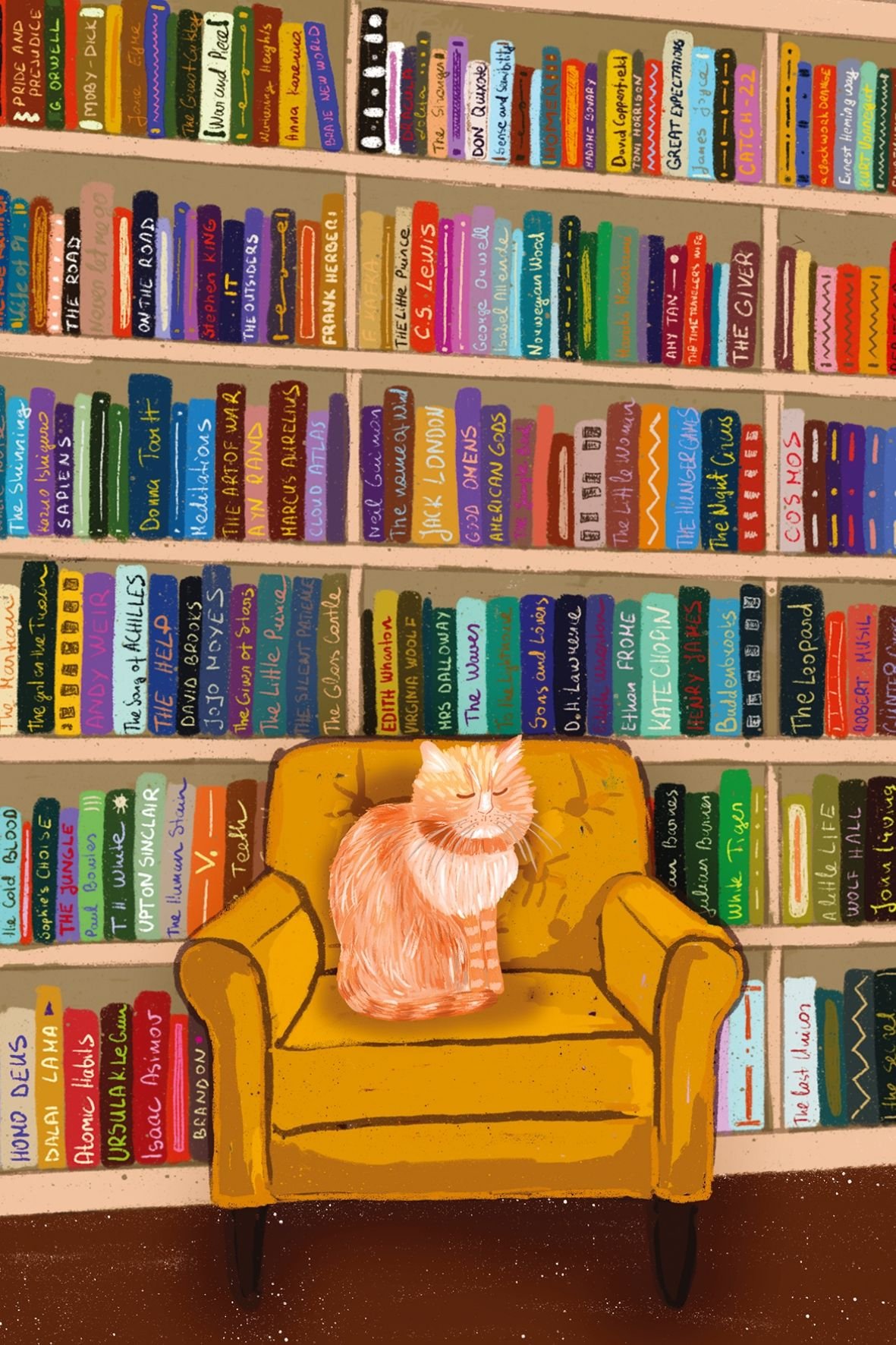
books, reading, cozy scenes
coffee, food, everyday life
nature, landscapes
mail-related themes
These are the kind of cards that don’t make people stop and think “why this?”, they just… make sense.
If you want easy “safe” choices like these, I’ve grouped many of them in my store.
And when you’re new or dealing with a confusing profile, that’s exactly what you want. Something that feels natural, not forced. This is also why I often group postcards in my shop by themes that “just work” for Postcrossing. Not the rarest designs, but the ones people actually send.
What do you even write on a postcard to a stranger?
At the beginning, this feels like the hardest part. You’re sitting there thinking, “what am I supposed to say to someone I don’t know?”
The truth is, it doesn’t have to be complicated.
You can:
answer something from their profile
share a small detail about your day
talk about where you live
mention why you chose the card
Even something simple like:
“Today it rained all day, so I stayed inside with a book and tea.”
That’s already enough to feel real.
You’re not writing a perfect letter. You’re just leaving a small piece of your day behind.
If you ever feel stuck, I wrote a simple guide with real examples of what to write on a postcard.
Is it weird if I only write a few sentences?
Not at all. Most postcards don’t have much space anyway, and people are not expecting an essay.
A few thoughtful lines are often better than a long text that says very little.
So if you only have a couple of sentences, that’s completely fine. What matters is that it feels like you wrote them, not copied them.
Can I choose which countries I send postcards to?
Not directly.
When you request an address, the system assigns you a random country. That’s part of the idea. You don’t control it, and that’s why it stays interesting.
Still, randomness is a big part of Postcrossing. You might send three cards in a row to the same region, and then suddenly get something completely different.
If you want full control over countries, that’s more of a penpal or swap situation.
What happens if I take a break or stop sending postcards?
Nothing dramatic.
You can pause at any time. There’s no penalty for being inactive, and no one is tracking your “performance”.
The only important thing is this:
If you’ve already requested addresses, it’s good practice to send those postcards before disappearing. Otherwise, someone is waiting for something that never arrives.
But apart from that, you can step away whenever you need. Life changes, budgets change, energy changes. Postcrossing is meant to fit into your life, not the other way around.
Why do some people complain about receiving “bad” postcards?
Because expectations are a tricky thing. Some people build very specific ideas about what they want to receive. And when reality doesn’t match that, they get disappointed.
You might receive:
a very simple card
a card that doesn’t match your taste
a message that feels a bit rushed
And yes, that can be disappointing. But it’s also part of the system. You’re exchanging with real people, not curated boxes. Over time, most people adjust. They stop expecting perfection and start appreciating the moments when everything just clicks.
And those moments are what keep people here for years.
Do people actually read your profile, or is it mostly random?
Both.
Some Postcrossers clearly read your profile carefully. You can tell from the way they write, from the postcard they choose, from small details they pick up on. And then there are postcards that feel more random. Not in a bad way, just… less personal.
That’s part of the experience. If you write a profile, it definitely increases your chances of getting something that fits you. But it’s never a guarantee. You’re still part of a big, global exchange, not a personalized service.
The nice part is that when someone does read your profile and responds to it, you notice immediately. Those postcards stand out.
Can you start Postcrossing with just a few postcards, or do you need a big collection?
You can absolutely start with just a few.
You don’t need a drawer full of postcards before you begin. In fact, starting small is often better. It keeps things simple and helps you figure out what you actually enjoy sending.
Over time, you might build a small collection of “safe choices”: postcards that work for many different profiles. That makes the process easier and less stressful.
This is also why I like the idea of small sets or mixed selections. You don’t have to commit to one style or buy too much at once. You can try different things and see what feels right for you.
If you’re not sure how many postcards you actually need (and don’t want to overbuy), I wrote about it here.
Is Postcrossing more about collecting, or about the experience?
That depends on the person.
Some people collect postcards from as many countries as possible. Some focus on specific themes, like maps, animals, or art. They enjoy the structure and the idea of building a collection.
Others don’t care much about collecting at all. They’re there for the small moment of connection. Writing something, sending it out, and opening the mailbox one day to find something unexpected.
Most people are somewhere in between.
But if you stay in Postcrossing long enough, you start to notice that the experience tends to matter more than the “perfect” card.
Do you have to be very active, or can you do it slowly?
You can do it as slowly as you want. There’s no minimum, no pressure to send regularly, no “you’re doing it wrong” if you take your time.
Some people send postcards every week. Others send a few per month. Some disappear for a while and then come back. That flexibility is one of the reasons people stick with it for years. It adapts to your life instead of demanding a fixed rhythm.
What if I send something and feel like it wasn’t “good enough”?
Almost everyone feels this at some point.
You choose a postcard, you write your message, you send it… and then you start thinking, “maybe I should have picked something better”.
The truth is, the other person will most likely just be happy to receive something. A real postcard. A real message. A small moment in their mailbox.
Perfection is mostly something we put on ourselves. From the outside, what you sent is usually more than enough. And over time, that feeling goes away. You start trusting your choices more, and the whole process becomes lighter.
Why do people keep doing Postcrossing for years?
Because it keeps surprising them.
It’s simple, but it never feels completely predictable. You don’t know what you’ll receive, when it will arrive, or who it will come from.
Some postcards are forgettable. Some are strange. Some are unexpectedly perfect.
And those small, unexpected moments are enough to keep people going.
It’s not about getting the best card every time. It’s about knowing that something is always on its way.
If you’re thinking about starting, you can begin with just a few simple postcards – you don’t need anything complicated. Running a postcard shop, I see this all the time: people overthink their first postcards. In reality, the ones that work best are usually the simplest.
Start small, send one card, and see how it feels. That’s more than enough for the beginning.
You may also like:
Why I’m Slowly Shifting from Single Postcards to Thoughtful Collections
The Window Diaries with Marluki: cozy postcard series
If you like the most popular postcard series, you’ll love this one too!
Meet the Travelling Goose – A Postcard Series for Postcrossing
How to Start Sending Postcards Again After a Break