One of the funniest things about Postcrossing is that writing a postcard should technically be very simple. It’s a small card, so there’s limited space, and nobody expects a novel.
And yet somehow, many Postcrossers have experienced this exact situation:
You pick a postcard, find a perfect pen for the specific paper, and suddenly your brain completely stops working. Usually for two reasons: either you can’t think of what to write, or you realize that there won’t be enough space for your thought.
Not just beginners, either. People who have sent hundreds or even thousands of postcards still sometimes stare at a card thinking:
“What do I even write now?”
The weird pressure to write something “interesting”
I think part of the problem is that postcards feel strangely personal. A text message disappears in seconds, social media posts get buried almost immediately. But postcards feel permanent, they travel across the world, end up in collections, get photographed, saved in boxes, pinned to walls, or rediscovered years later.
That tiny piece of paper feels important. We start feeling like every postcard should contain a funny story, an interesting fact, or some kind of profound observation about life.
Especially in Postcrossing, where many profiles include long lists of interests and preferences, it can start feeling less like “writing a small postcard” and more like accidentally preparing for a very tiny international exam.
Meanwhile your brain is just trying to remember whether you already told somebody about the weather three postcards ago.
“Happy Postcrossing!” fatigue is real
After sending enough postcards, many of us develop a small collection of “safe” topics. The weather. Local food. What season it is. A quick “Happy Postcrossing!” at the end.
There is nothing wrong with any of those things. The problem appears when we start feeling that we should write something more interesting, but have no idea what that “something” is.
But I think many people secretly want postcards to feel a little more alive than that: more personal, more human, and less like copying the same template forever. That’s usually the moment when postcard writing suddenly becomes much harder.
If you’re new to the hobby, you might also enjoy my Postcrossing Starter Guide.
The problem is not creativity
I honestly don’t think most people struggle because they are “bad” at writing postcards. I think the real problem is overthinking.
People assume every postcard needs:
- an interesting story
- a deep thought
- a meaningful life lesson
- a unique fact
- something unforgettable
Years later, I don’t remember many statistics or carefully chosen facts. However, I find myself paying attention to the simple things that postcrossers write to me, such as a random sentence about a noisy seagull outside somebody’s apartment or a complaint about rain. I rememeber a tiny story about a cat interrupting postcard writing. I remember a postcard written during a train delay. Sometimes it looks more real then the facts about capital and number of citizens.
Tiny prompts help more than people expect
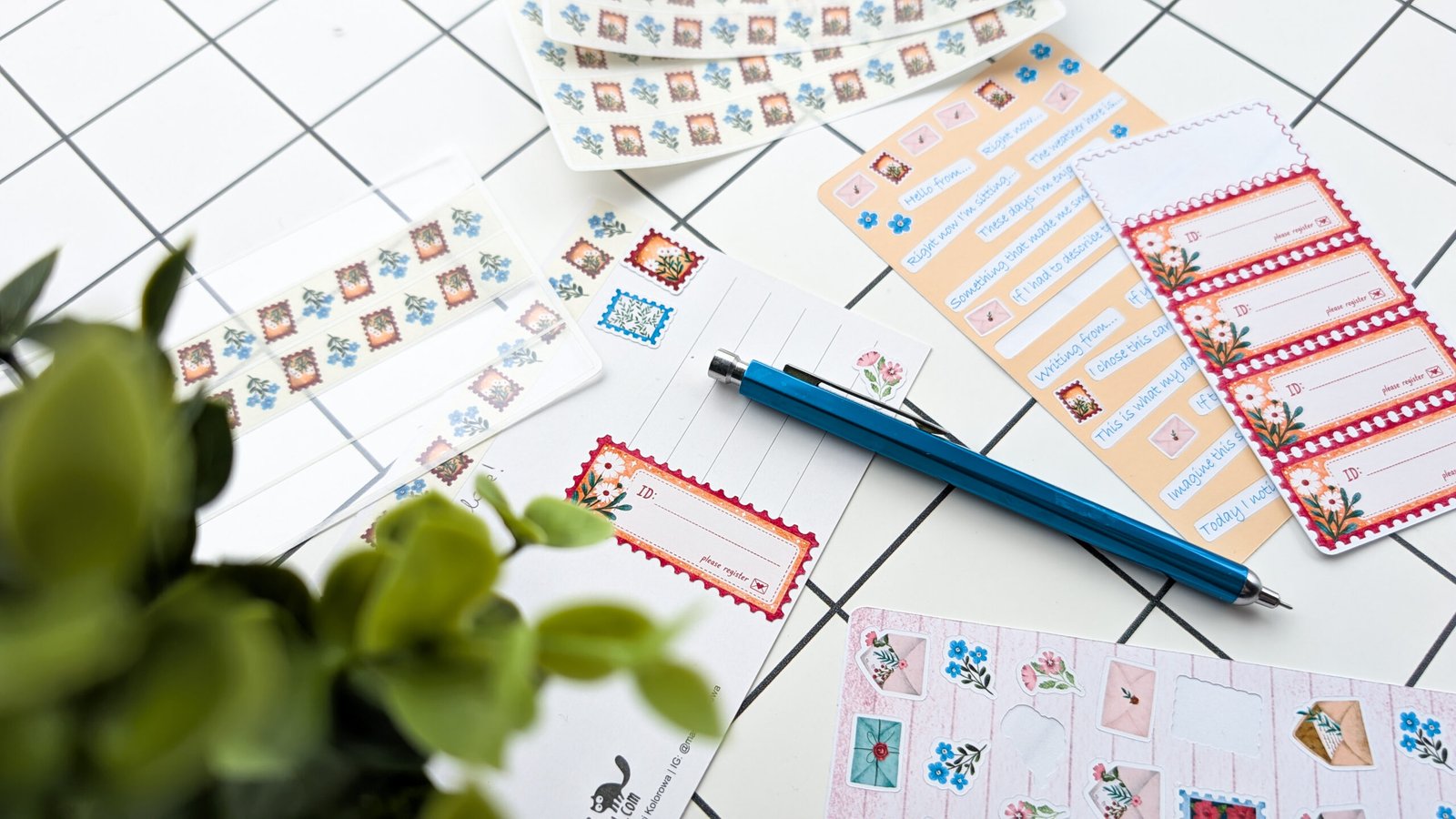
This is honestly one of the reasons I became so interested in postcard prompts lately (and that was my idea for the Favorite Mail Club vol. 1). Not because people need help being creative, but because prompts help remove the pressure of the blank space.
Sometimes promts takes is a tiny starting point:
- What made you smile recently?
- What can you hear right now?
- What food would you recommend to a stranger visiting your country?
- What small thing feels comforting lately?
- What place do you always recommend to visitors?
Suddenly your brain stops trying to write “the perfect postcard” and simply starts talking like a normal person again.
Real postcards are rarely perfect
I think social media quietly affected postcard writing too.
People now see beautifully styled mail photos, aesthetic handwriting, perfect journaling pages, carefully curated stationery collections… and it becomes easy to feel like every postcard should also look meaningful, artistic, or impressive somehow.
Real postcard writing often looks more like:
- sitting at the kitchen table late at night
- trying not to smudge the stamp
- realizing you already used the same fact twice today
- fighting for writing space because the address took half the postcard
- accidentally writing crooked because the dog moved your elbow
I think that imperfect side is part of the charm.
What do I write when I have absolutely no ideas?
If you’re completely stuck, try one of these:
- What did you do today?
- What’s the weather like right now?
- What are you looking forward to this week?
- What food would you recommend from your country?
- What made you smile recently?
- What can you see from your window?
None of these topics are extraordinary, that’s exactly why they work.
So why is it so hard to know what to write on a postcard?
Mostly because we care. Unlike a conversation, a postcard doesn’t give immediate feedback. You write a few sentences, send them across the world, and often never find out whether the recipient smiled, laughed, or immediately forgot what you wrote. We want the postcard to be interesting, memorable, thoughtful, and somehow worth sending across the world , but the truth is that most people are not looking for perfection. They are looking for a small glimpse of another person’s life. And that is usually much easier to write than we think.
Sometimes all it takes is a sentence about the dog, a noisy bird, a stubborn cat, or the cup of tea sitting next to you while you write.
That’s already a story.
If this is exactly the problem you keep running into, start with my postcard writing ideas hub. It collects simple formulas, real message examples and writing prompts for the moments when your mind goes blank.
Need More Ideas?
If this article sounds familiar, I created a free PDF guide that goes much deeper.
Inside you’ll find 50 postcard prompts, conversation starters and writing ideas that make blank postcards much less intimidating.
Related posts:
Mail Club vs Subscription Box: What’s the Difference?
Is Postcrossing an Expensive Hobby? (An Honest Breakdown)
What Postcard to Send When a Postcrossing Profile Is Blank
How to Start Sending Postcards Again After a Break